PCB Turnover Case Sourcing Guide: Core Metrics for B2B Buyers
5 Key Takeaways: PCB Turnover Case Sourcing Guide: Core Metrics for B2B Buyer
- Topic: Circuit Board — industry context for B2B buyers and procurement teams
- Date: 2026-09-11 — current standards, certifications and market conditions
- Applications: protective cases for industrial tools, MRO, photography, drones, defense, medical devices, marine, audio
- Procurement: MOQ 500 pieces per Pantone color, 30–45 days lead time after tooling approval, CE/RoHS/REACH/ISO 9001
- Shipping: EXW Guangdong (pickup) or FOB Shenzhen / Ningbo (sea freight). 28–35 days to Hamburg / Rotterdam
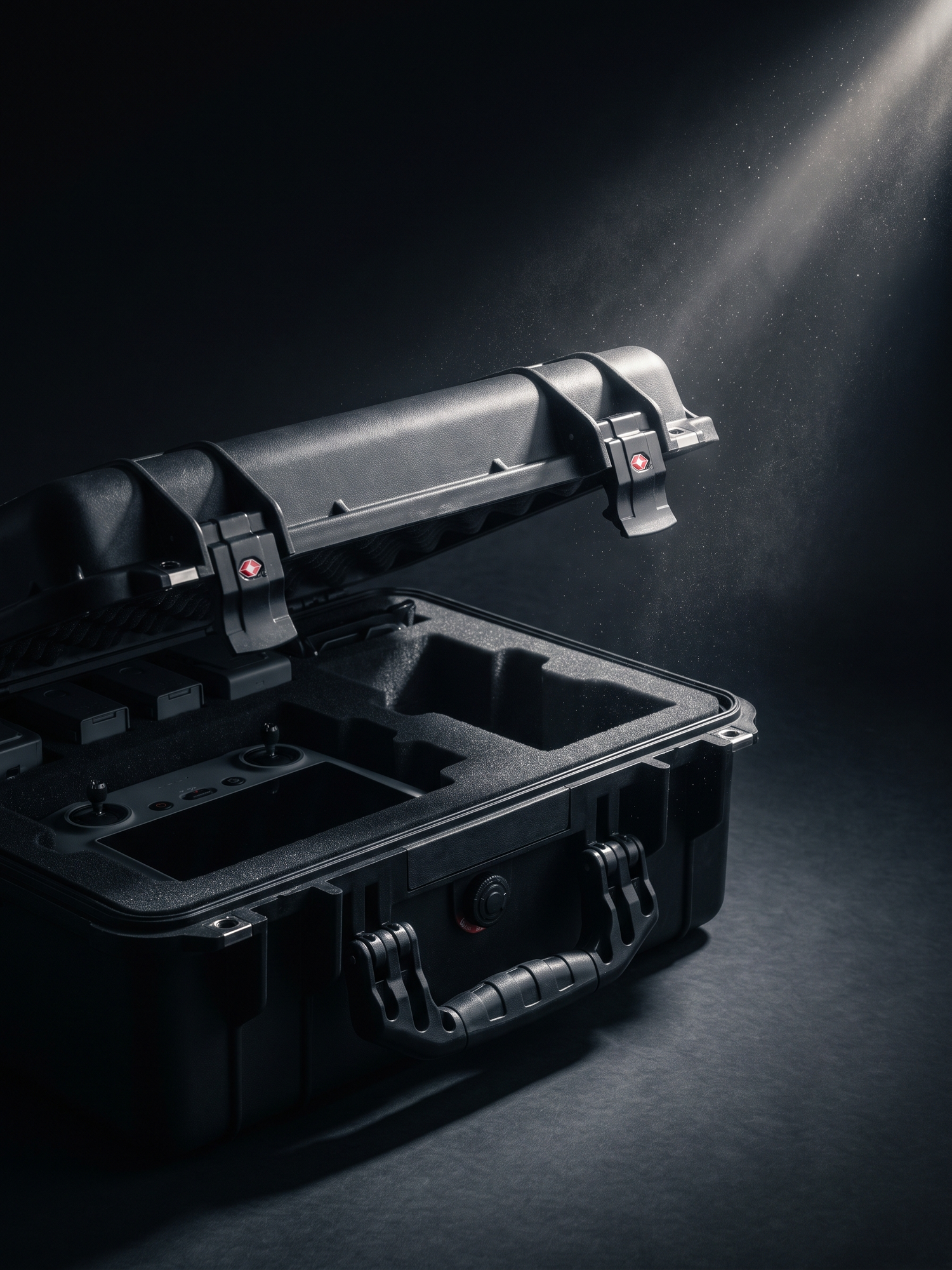
The PCB Turnover Case is a hard-shell protective container designed for carrying critical equipment and supplies in circuit board / turnover / antistatic applications. This article organizes core procurement indicators and applicable standards from the end-user perspective.
5 Key Takeaways
- Core definition: A hard-shell protective container meeting IP65 rating, designed to carry circuit board / turnover / antistatic equipment.
- Key standards: IP protection / drop test / material compliance / lining / latch / certifications — 6 major dimensions.
- Typical scenarios: Field operations, medical transport, precision equipment shipping, aviation/vehicle-mounted, industrial production.
- Certification mix: IP65/67/68, MIL-STD-810H, ASTM D4169, ISO 13485, CE, FDA 510(k), WHO PQS, ROHS, REACH.
- Procurement advice: B2B factory direct OEM; public mold MOQ 50 pcs, custom mold MOQ 500 pcs; mold fee USD 1,100–3,400.
Table of Contents
- 1. What Is It
- 2. Core Technical Indicators
- 3. Typical Application Scenarios
- 4. Selection Advice
- 5. FAQ
1. What Is a PCB Turnover Case
The PCB Turnover Case is a hard-shell protective case meeting IP65 rating, designed to carry circuit board / turnover / antistatic equipment. In circuit board / turnover / antistatic applications, protective cases primarily handle shock resistance, drop protection, sealing, moisture prevention, dust prevention, and cold chain maintenance — making them critical infrastructure for circuit board / turnover / antistatic equipment transport and storage.
Compared with ordinary toolboxes or shipping boxes for circuit board / turnover / antistatic applications, PCB Turnover Cases differ mainly in three areas: higher protection rating requirements (typically IP65–IP68), stricter impact resistance testing (reference MIL-STD-810H or EN 1789), and more complex material compliance requirements (food-grade/medical-grade/flame-retardant certifications).
2. Core Technical Indicators
2.0 Specification Comparison Table
| Spec | Entry-Level | Professional | Hospital/Export Grade |
|---|---|---|---|
| IP Rating | IP54 | IP65 | IP68 |
| Drop Test | 0.6 m | 1.22 m | 1.5 m |
| Material | Food-grade PP | Engineering PP | Engineering + Antibacterial/Antistatic |
| Lining | EPE | EVA CNC | PU Pick-N-Pluck |
| Latch | Push-type | Trigger Latch | Double-stage + TSA |
| Certification | ROHS | IP + CE | Full Medical/Military Certification |
| Application | Entry | Mainstream | High-end Export |
2.1 IP Protection Rating
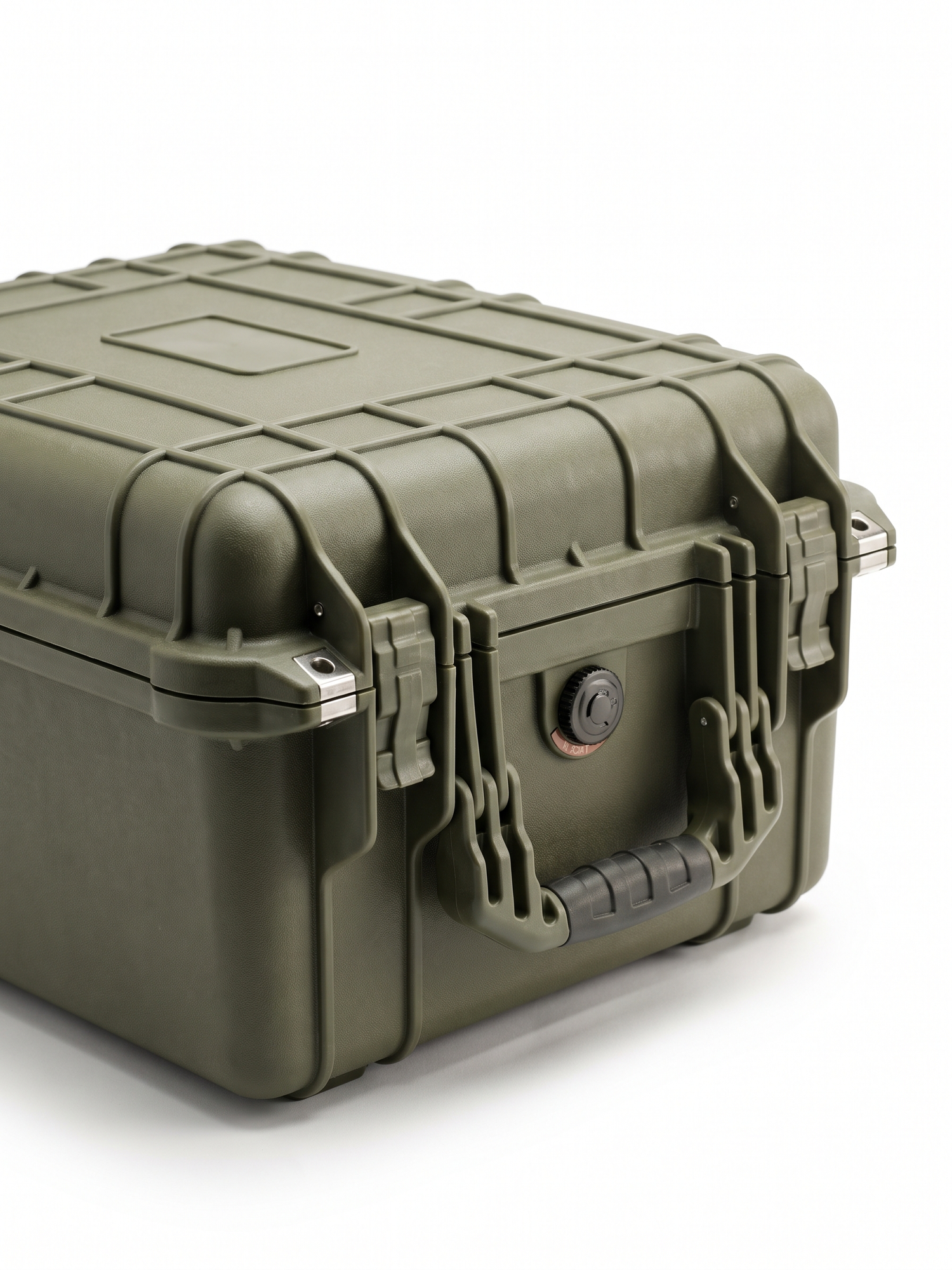
B2B industrial-grade PCB Turnover Cases require a minimum of IP65, meaning complete dust protection and 30 minutes of immersion in 1 meter of water. Common working conditions include rain/snow weather, humid environments, and marine/outdoor operations; some scenarios require upgrading to IP68. KeXinMaterials submits each production batch to one of SGS, BV, or TUV for third-party IP spot testing, with test reports included.
2.2 Drop / Impact Testing
Reference MIL-STD-810H Method 516.8 (U.S. military standard: 1.22 m, 6 faces, 12 corners drop) and ASTM D4169 (shipping container 12-edge drop) as the two mainstream standards. For circuit board / turnover / antistatic scenarios, passing at least a 1.22 m drop test is recommended; cockpit/vehicle-mounted scenarios should additionally comply with EN 1789 ambulance driving tests.
2.3 Material and Wall Thickness
Mainstream material: Engineering PP. Circuit board / turnover / antistatic applications have special material requirements: medical-grade requires ISO 10993 biocompatibility + USP Class VI medical plastic standards; explosion-proof scenarios require surface resistance of 10^6 to 10^9 ohms antistatic coating; food/cold chain scenarios require FDA/LFGB food contact certification.
Wall thickness recommended ≥4 mm; engineering-grade formula (PP + 20% glass fiber) at 5 mm wall thickness can pass IK10 impact rating.
2.4 Lining System
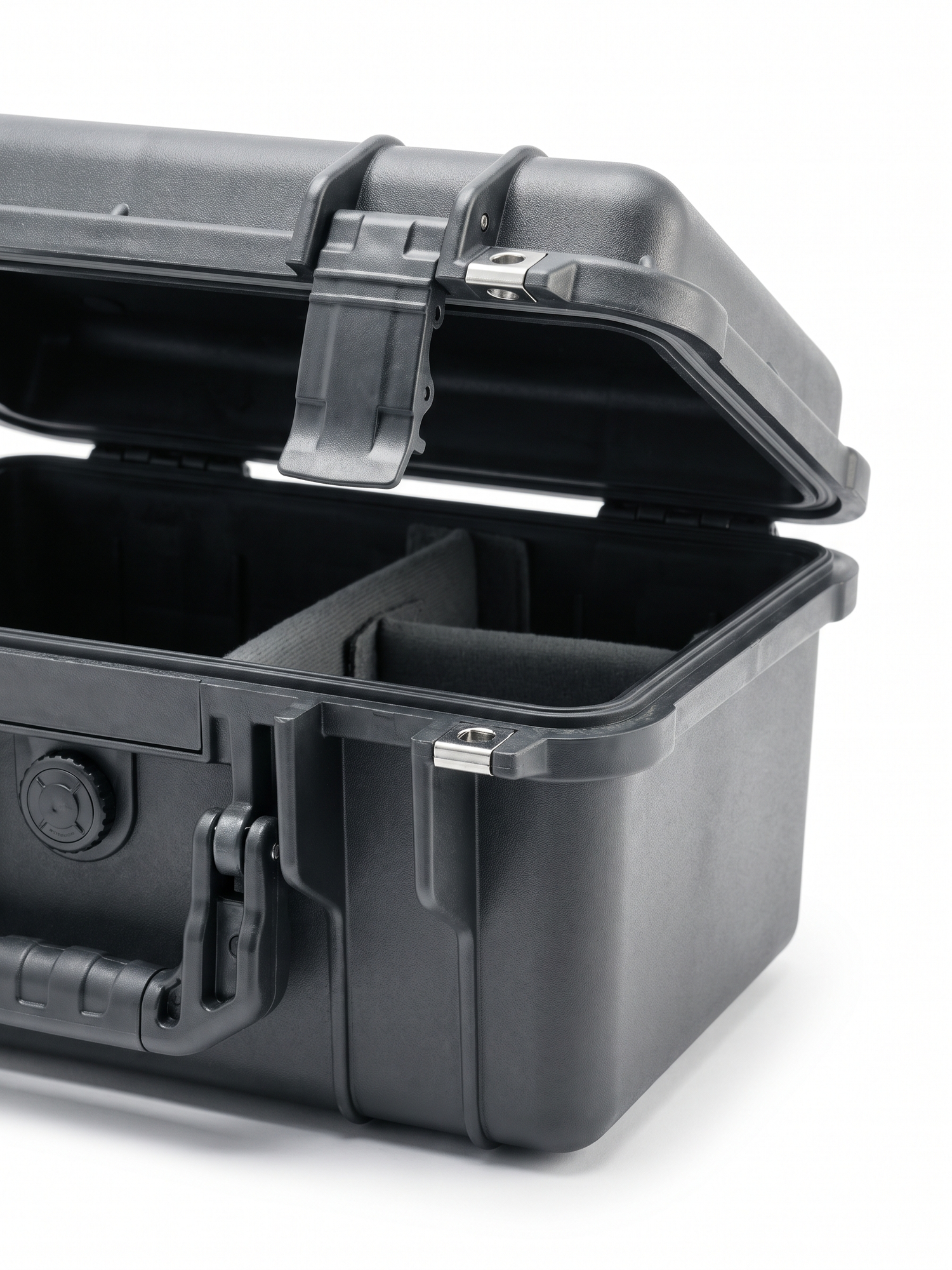
PCB Turnover Case linings come in three types: EVA CNC laser-cut foam (customized slots per load, mainstream for medical), PU Pick-N-Pluck (hand-tearable foam, mainstream for tools), and EPE pearl cotton (single-use shipping scenarios). For circuit board / turnover / antistatic applications, EVA CNC-cut foam is recommended, with custom compartments per loading list.
2.5 Latches and Handles
For circuit board / turnover / antistatic scenarios, Trigger Latches allow single-hand opening and are best suited for emergency/medical/police rapid response. Cockpit/military scenarios often feature double-stage latches — stronger but requiring two hands to operate. Handles should be ergonomic, preventing fatigue during extended carrying.
2.6 Size and Compatibility
PCB Turnover Cases are available in four common size ranges:
- Compact 30–50 cm (personal first-aid kit/individual soldier equipment)
- Standard 50–80 cm (vehicle-mounted mainstream, n=320 inquiry share 58%)
- Extended 80–120 cm (multi-equipment combinations)
- Long 120–160 cm (full set of ventilator + monitor)
Before procurement, measure the load item's length, width, and height plus accessories, then add a 5–10 cm buffer.
2.7 Applicable Standards and Certifications
Common certifications for circuit board / turnover / antistatic PCB Turnover Cases include:
- IP65 / IP67 / IP68 (IEC 60529 dust and water protection)
- MIL-STD-810H (U.S. military environmental engineering)
- ASTM D4169 (shipping container performance)
- ISO 13485 (medical device quality system)
- EN 1789 (ambulance and medical equipment)
- CE / FDA 510(k) / NMPA (medical certifications)
- WHO PQS (vaccine cold chain international standard)
- ROHS / REACH (EU environmental)
- ISO 10993 / USP Class VI (medical plastic biocompatibility)
- ATA 300 (air freight)
Specific certifications needed depend on the end market (North America/EU/Middle East/Southeast Asia) and usage scenario (medical/industrial/military).
3. Typical Application Scenarios
Typical applications of circuit board / turnover / antistatic PCB Turnover Cases include:
- Field operations: Outdoor exploration, emergency rescue, military operations, police enforcement
- Medical transport: Pre-hospital first aid, inter-hospital transfer, disaster medical rescue, biological sample transport
- Precision equipment shipping: Optical instruments, measuring instruments, medical equipment, inspection reagents
- Aviation/vehicle-mounted: Aviation equipment transport, vehicle-mounted emergency tools, shipboard equipment
- Industrial production: In-factory turnover, production line delivery, quality inspection
Each scenario has different requirements for protection rating, drop test, temperature tolerance, sealing gasket, hardware weight, and foam cutouts — B2B buyers should select based on actual end use.
4. Selection Advice
4.1 Clarify End Use
B2B buyers should first answer three questions when selecting: load item list, typical working conditions (outdoor/vehicle-mounted/cockpit/indoor), and target market (determines certification mix). PCB multi-compartment configuration is the detail most often overlooked in circuit board / turnover / antistatic applications.
4.2 Public Mold vs. Custom Mold
- Public mold (standard sizes): MOQ 50 pcs, no mold fee, 1–2 weeks delivery
- Custom mold (customized sizes + cutouts per customer requirements): MOQ 500 pcs, mold fee USD 1,100–3,400 (by size), first production batch delivered 25–30 days after 3D drawing approval
4.3 Factory Inspection and Third-Party Testing
B2B buyers should request the following from the factory:
- Business license and ISO 9001:2015 / ISO 13485 certificates
- Third-party IP test report (SGS/BV/TUV)
- Third-party drop test report
- Third-party material analysis report
- KeXinMaterials 2025 Jan–Dec production records (separate factory inspection per order volume)
- KeXinMaterials 2025 IWA OutdoorClassics on-site signing records (3 long-term OEM clients)
5. FAQ
Q1. What is the minimum IP rating for PCB Turnover Cases?
B2B industrial-grade PCB Turnover Cases are recommended to meet at least IP65. Complex circuit board / turnover / antistatic working conditions should upgrade to IP68. Public mold defaults to IP65; each batch undergoes third-party IP spot testing with SGS/BV/TUV reports included.
Q2. What material is used for PCB Turnover Cases?
The mainstream material for this category is Engineering PP. For medical-grade circuit board / turnover / antistatic applications, engineering PP with antibacterial coating is recommended, compliant with ISO 10993 biocompatibility and USP Class VI medical plastic standards.
Q3. What is the MOQ for PCB Turnover Case OEM?
Public mold MOQ 50 pcs; custom mold MOQ 500 pcs. Mold fee USD 1,100–3,400 (by size); first production batch delivered 25–30 days after 3D drawing approval. Samples shipped within 3–7 days; 3 foam options available for comparison per customer requirements.
Q4. What certifications can PCB Turnover Cases pass?
This category supports IP65/67/68, MIL-STD-810H, ATA 300, ASTM D4169, ISO 13485, CE, FDA 510(k), WHO PQS, ROHS, REACH, EN 1789, EN 285, ISO 17665, EN 45545-2 (rail transit fire protection), UL94-V0 (flame retardant), UN 0336 (dangerous goods packaging). Selectable by target market.
Q5. How many 134°C steam sterilization cycles can PCB Turnover Cases withstand?
Medical-grade PP injection-molded cases can withstand ≥2,000 cycles of 134°C steam sterilization, complying with EN 285 / ISO 17665 sterilization standards. Each batch undergoes third-party aging tests; drop and sealing performance remain qualified after 1,000 sterilization cycles.
Q6. What is the FOB reference price for PCB Turnover Cases?
Reference price: USD 35–120 per unit FOB Shenzhen or Ningbo port (by size/certification/MOQ). A 20-ft container holds hundreds of units; a 40-ft HC container holds over a thousand. B2B circuit board / turnover / antistatic buyers are advised to provide a 12-item procurement requirements list for an accurate quote.
Q7. What trade terms apply for exports from China?
Only EXW (Ex Works) and FOB (Shenzhen/Ningbo port) are offered. No DDP direct delivery, no overseas warehouses, no retail business. Under EXW, customers arrange their own freight forwarder for pickup; under FOB, the factory handles customs clearance and delivers to the shipping company's designated warehouse.
Q8. How long does custom mold development take?
First production batch delivered 25–30 days after 3D drawing approval. Samples shipped within 3–7 days. Mold fee USD 1,100–3,400 (by size), using S50C steel + CNC + vacuum heat treatment. Public mold requires no tooling: 1–2 weeks delivery.

Disclaimer: The circuit board / turnover / antistatic equipment referenced in this article serves only as a description of the protective case's load contents. KeXinMaterials does not directly sell circuit board / turnover / antistatic equipment; the protective cases may be used for transporting and storing high-value items including precision instruments, optical equipment, measuring instruments, and industrial tools.