Vibration Analyzer Transport Box – Professional Carrying Case for Vibration Monitoring Equipment
5 Key Takeaways: Vibration Analyzer Transport Box – Professional Carrying Cas
- Topic: Vibration Analysis — industry context for B2B buyers and procurement teams
- Date: 2026-09-11 — current standards, certifications and market conditions
- Applications: protective cases for industrial tools, MRO, photography, drones, defense, medical devices, marine, audio
- Procurement: MOQ 500 pieces per Pantone color, 30–45 days lead time after tooling approval, CE/RoHS/REACH/ISO 9001
- Shipping: EXW Guangdong (pickup) or FOB Shenzhen / Ningbo (sea freight). 28–35 days to Hamburg / Rotterdam
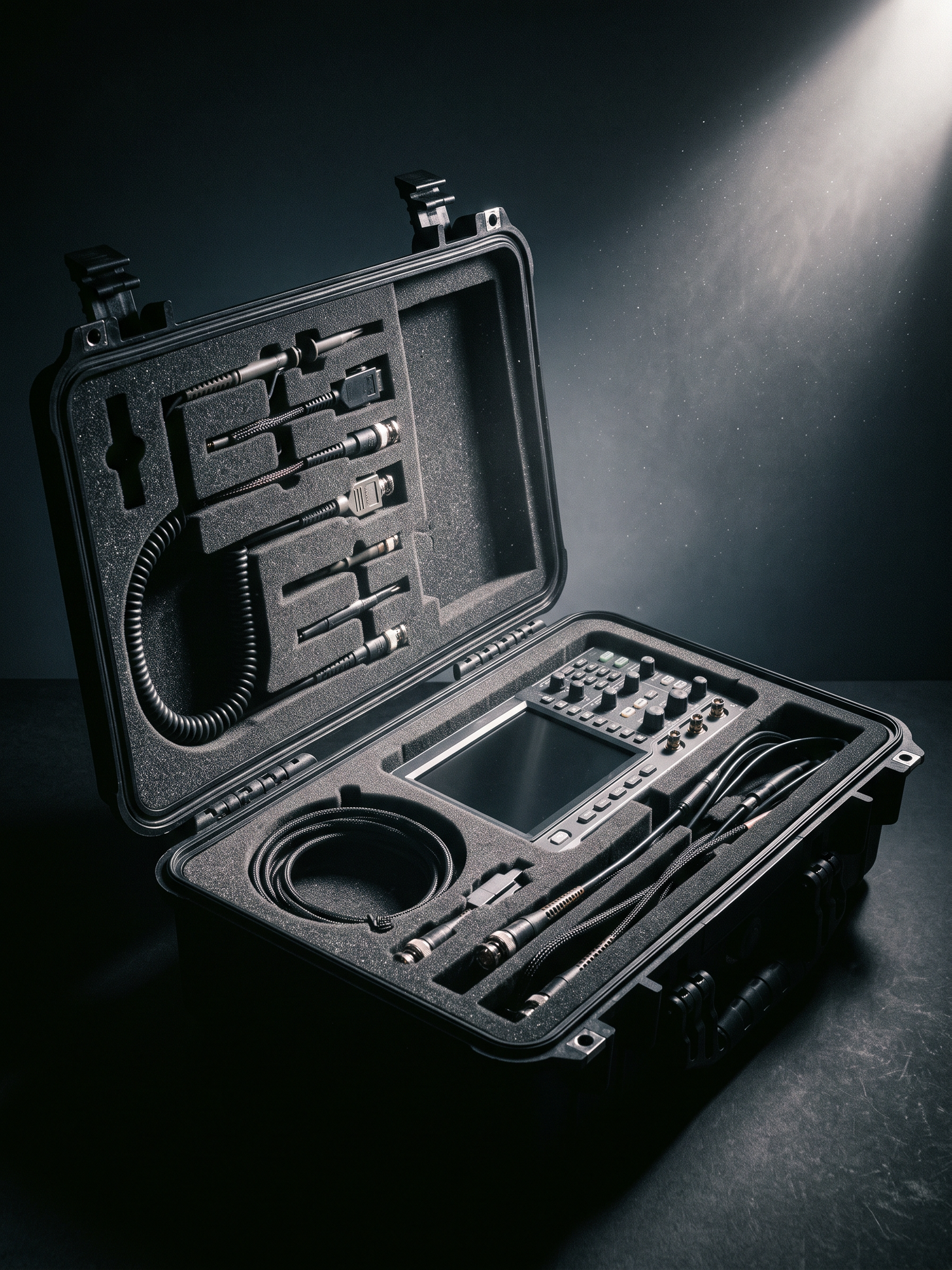
Why a Specialized Transport Box Is Essential for Vibration Analyzers
Vibration analyzers are precision instruments used to measure, record, and analyze mechanical vibration in industrial machinery. These devices are critical for predictive maintenance programs, helping facilities detect equipment faults before they escalate into catastrophic failures.
During field inspections, on-site quality audits, and routine maintenance rounds, vibration analyzers must be transported safely between measurement points. A single drop or electromagnetic interference event can:
- Damage sensitive piezoelectric sensors
- Disrupt calibrated measurement circuits
- Void the manufacturer's calibration certification
- Compromise the accuracy of vibration readings
A professional vibration analyzer transport box protects your investment and ensures measurement integrity throughout every deployment.
Key Design Features for Vibration Analyzer Transport
1. Anti-Static Foam Interior
Vibration analyzers contain sensitive electronic circuits that are vulnerable to electrostatic discharge (ESD). Our transport boxes use anti-static foam throughout the interior:
- Surface resistivity: 10⁹–10¹¹ Ω/sq, preventing static charge accumulation
- ESD-safe pink foam: Chemically treated to dissipate static without damaging components
- Conductive foam option: For environments with extreme static risk, black conductive foam is available
Anti-static foam prevents static charges from building up inside the case and protects the analyzer's circuits, displays, and sensors during transport.
2. Precision-Cut Foam Compartments
Each transport box features digitally engineered foam cutouts matched to specific analyzer models:
- Main instrument recess: Form-fitting pocket that holds the analyzer securely during transport
- Sensor holder: Dedicated channel for accelerometer probes and cables
- Accessory bay: Organized space for vibration transducer cables, batteries, and calibration certificates
- Documentation pocket: Clear vinyl sleeve for calibration reports and inspection records
Custom foam engineering ensures zero movement during transport, eliminating the risk of impact damage.
3. EMI/RF Shielding (Optional)
For analyzers used in environments with high electromagnetic interference, KeXinMaterials offers EMI shielding upgrades:
- Conductive nickel-copper coated mylar lining inside the case shell
- RF-absorbing foam underlayer
- EMI-safe latches and hardware
- Shielding effectiveness: >60 dB from 10 MHz to 10 GHz
4. Portable Form Factor
Field engineers need transport solutions that are easy to carry over long distances:
- Shoulder strap: Padded non-slip shoulder pad for comfortable carrying
- Top carry handle: Reinforced handle for short-distance transport
- Compact profile: Slim enough to fit in vehicle compartments and equipment lockers
- Low weight: Lightweight construction adds minimal bulk to the engineer's toolkit
Application Scenarios
| Industry | Use Case | Box Requirement |
|---|---|---|
| Power generation | Turbine vibration monitoring | Anti-static foam, cable organizers |
| Manufacturing | CNC machine quality checks | Precision foam fit, documentation pocket |
| Oil & gas | Pump and compressor analysis | EMI shielding, dust-tight seal |
| Aerospace | Aircraft component testing | Conductive foam, shock absorption |
| Construction | Structural health monitoring | Weather-resistant, portable |
| Research labs | Academic research equipment transport | Anti-static protection, modular foam |
Standards & Testing
KeXinMaterials vibration analyzer transport boxes are designed to protect precision instrumentation:
- ASTM D4169: Standard practice for performance testing of shipping containers
- MIL-STD-810H test reports available on request (8-series Premium models) (optional): Environmental engineering considerations and laboratory tests
- IATA Packing Instructions: Safe transport of sensitive instruments by air
- ESD Association Standards: Compliance with ANSI/ESD S20.20 for ESD-sensitive equipment handling
Materials
Outer Shell
- Material: High-impact copolymer polypropylene
- Material thickness: 4–6 mm depending on size
- Temperature range: -20°C to +60°C
- Available colors: Black, blue, orange, yellow, gray
Foam System
- Primary foam: Cross-linked polyethylene (XLPE) foam base
- Surface layer: Anti-static polyethylene foam (pink)
- Conductive option: Black conductive EVA foam
- Custom option: Custom-cut PU foam to match any analyzer geometry
Customization Options
- Foam customization: CNC-cut foam for any vibration analyzer brand and model
- Logo printing: Silk-screen or pad-print company branding
- Cable management: Custom cable routing channels and tie-down points
- Modular inserts: Removable foam dividers to reconfigure interior layout
- Serial number plate: Engraved or printed equipment identification plate
- Accessories: Padded shoulder strap, pull handle, accessory pouch
FAQ
Q1: Why is anti-static foam important for vibration analyzers?
A: Vibration analyzers contain sensitive electronic circuits and sensors that can be damaged by electrostatic discharge (ESD). Anti-static foam prevents static charges from building up inside the case, protecting the analyzer's circuits, displays, and piezoelectric sensors from ESD damage during transport and handling.
Q2: Can you customize the foam for my specific analyzer model?
A: Yes. We use CNC precision cutting to create custom foam layouts for any vibration analyzer brand and model. Send us your analyzer's dimensions and a list of accessories, and we'll design a foam layout that provides a precise, secure fit.
Q3: What is the minimum order quantity for custom foam?
A: Custom foam cutouts require an MOQ of 20 units per configuration. Stock boxes with generic foam inserts are available for common analyzer models. Contact us to check availability for your specific model.
Q4: Do you offer EMI-shielded cases for vibration analyzers?
A: Yes. We offer EMI shielding upgrades including conductive nickel-copper coated mylar lining and RF-absorbing foam underlayer. EMI shielding provides >60 dB attenuation from 10 MHz to 10 GHz, protecting analyzers in high-interference industrial environments.
Q5: Are the cases water resistant?
A: Standard cases provide dust resistance and light splash protection. For outdoor use or environments with moisture exposure, we offer IP54-rated versions with enhanced sealing. IP65 waterproof versions are available for demanding field conditions.
Q6: What accessories are available?
A: Available accessories include: padded shoulder strap, top carry handle, accessory pouch, document pocket with clear vinyl cover, desiccant canister, humidity indicator card, serial number plate, and cable ties.
Q7: What is the delivery time for custom orders?
A: Stock boxes ship within 1–2 weeks. Custom foam engineering adds 1–2 weeks. Custom color and branding orders typically ship within 3–4 weeks from order confirmation.
Q8: What payment methods do you accept?
A: We accept T/T (Telegraphic Transfer), L/C, and PayPal (samples only). Bulk orders typically use T/T with 30% deposit and 70% balance before shipment. OEM orders with custom branding may require 50% deposit.